

GE Healthcare · 2013–2014
Breast Cancer Care Pathway
Designing a coordination system for multidisciplinary breast cancer care
A breast cancer diagnosis triggers one of the most complex coordination challenges in healthcare. Radiologists, surgeons, pathologists, oncologists, nurses, and care coordinators each hold part of the picture.
Few ever hold it whole.
GE Healthcare was exploring a new Breast Care Journey application built on GE's Predix platform to improve coordination across the care pathway.
The question wasn't simply what features to build, but whether the real problem was software at all.
Before designing the product, we needed to understand how care actually moved through the system—and where it broke down.
Key Insight
Research identified fragmented information flow—not clinical capability—as the primary barrier to timely treatment.
Strategic Impact
Research informed GE Healthcare's integrated breast cancer care strategy and contributed to the direction that later became the One-Stop Clinic offering.
Outcome
Designed a multidisciplinary care coordination MVP that advanced to Proof of Concept (POC) development on GE's Predix platform.
Role
Senior Systems Designer
Focus: Design research · Clinical workflow design · Information architecture · Systems strategy
Mapping the Care System
Rather than starting with screens, we mapped how information, decisions, and responsibility moved across the breast cancer pathway.
Working alongside clinicians, researchers, and product partners, we studied how information, decisions, and responsibility moved across the breast cancer pathway through interviews, workflow observation, journey mapping, relationship mapping, and iterative prototype testing.
Two phases of field research — across the United States, then at Institut Gustave Roussy (IGR) in France — studied how information, decisions, and responsibility moved across the pathway. I led the second phase at IGR, conducting the interviews, observation, and synthesis on site.
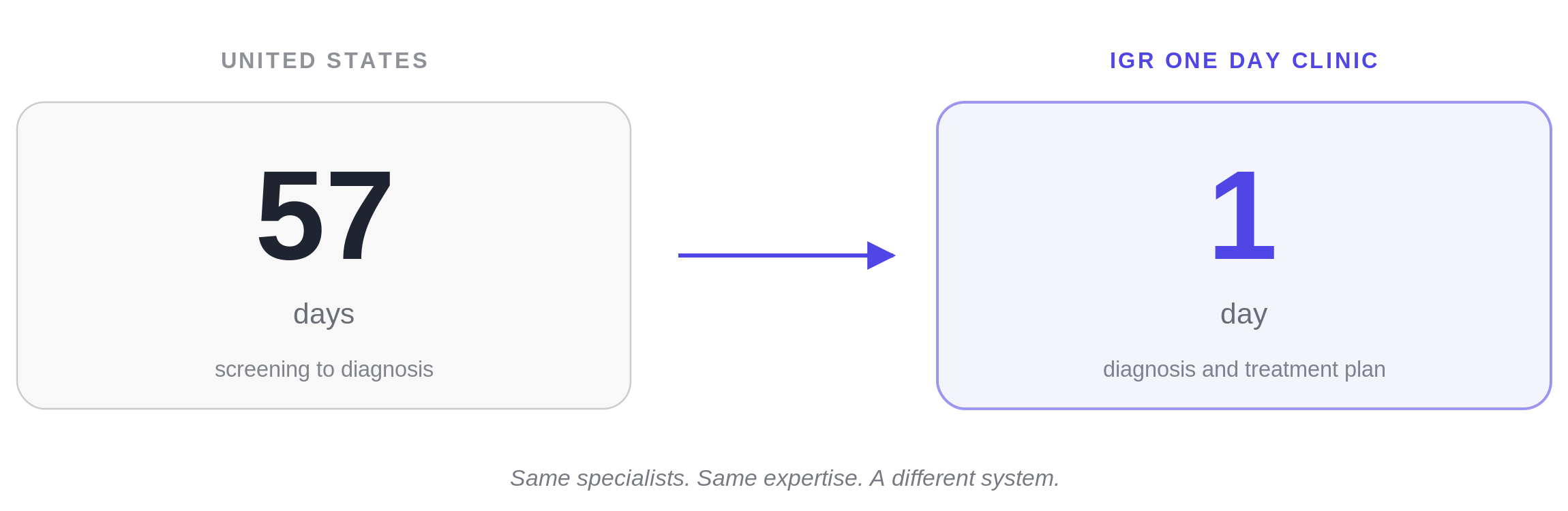
Our field research revealed the cost. Across the facilities we studied, the pathway from screening to diagnosis averaged 57 days — nearly two months of waiting while care teams coordinated across disconnected systems.
At IGR, a patient could arrive in the morning and leave the same evening with a diagnosis and a treatment plan. The difference wasn't technology or expertise. It was how information moved.




Research Insights
Research reframed the challenge. Clinical expertise wasn't the constraint. Fragmented information flow was. Across every site, we observed the same patterns:
Information disappeared during patient handoffs.
Providers worked across disconnected systems.
No one shared a complete view of the patient's journey.
Coordination depended on manual communication.
“It is important that the patient understands that the team is working with a cohesive voice.”
Finding the System's Center
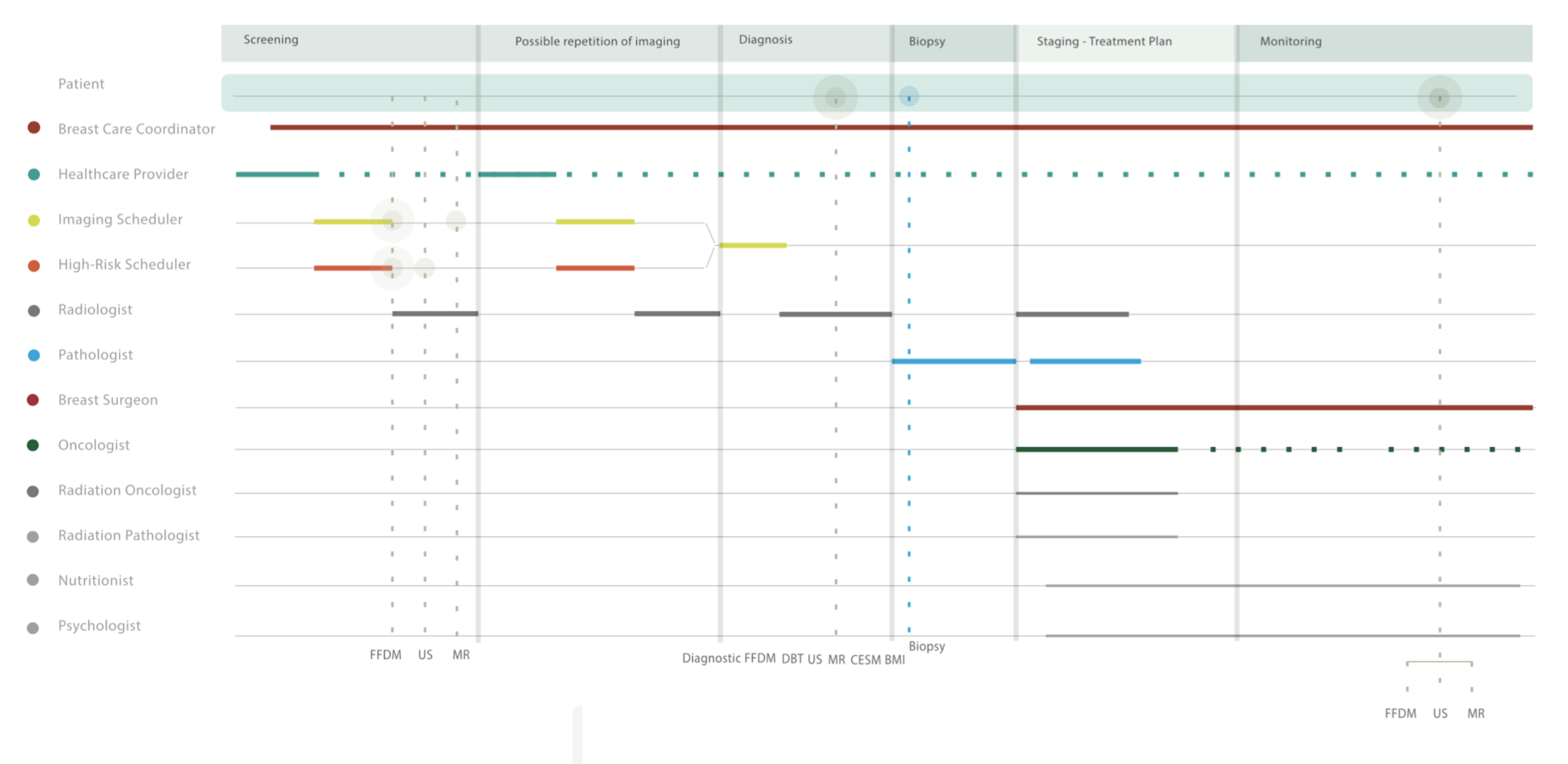
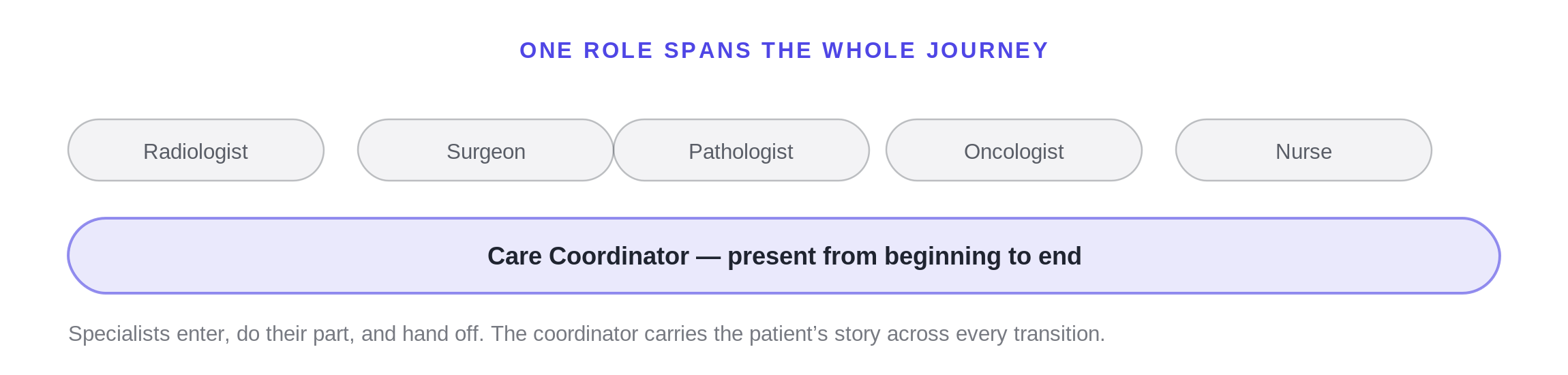
Mapping every role against the journey surfaced one pattern: most specialists enter, complete a task, and hand off. Only one role stays with the patient from beginning to end — the care coordinator. They were the system's connective tissue, holding the thread manually.
That became the organizing principle. Rather than optimizing individual tasks, we designed a shared system around the coordinator's whole-journey view — and made it available to everyone.
Information Architecture
Designing the Coordination System
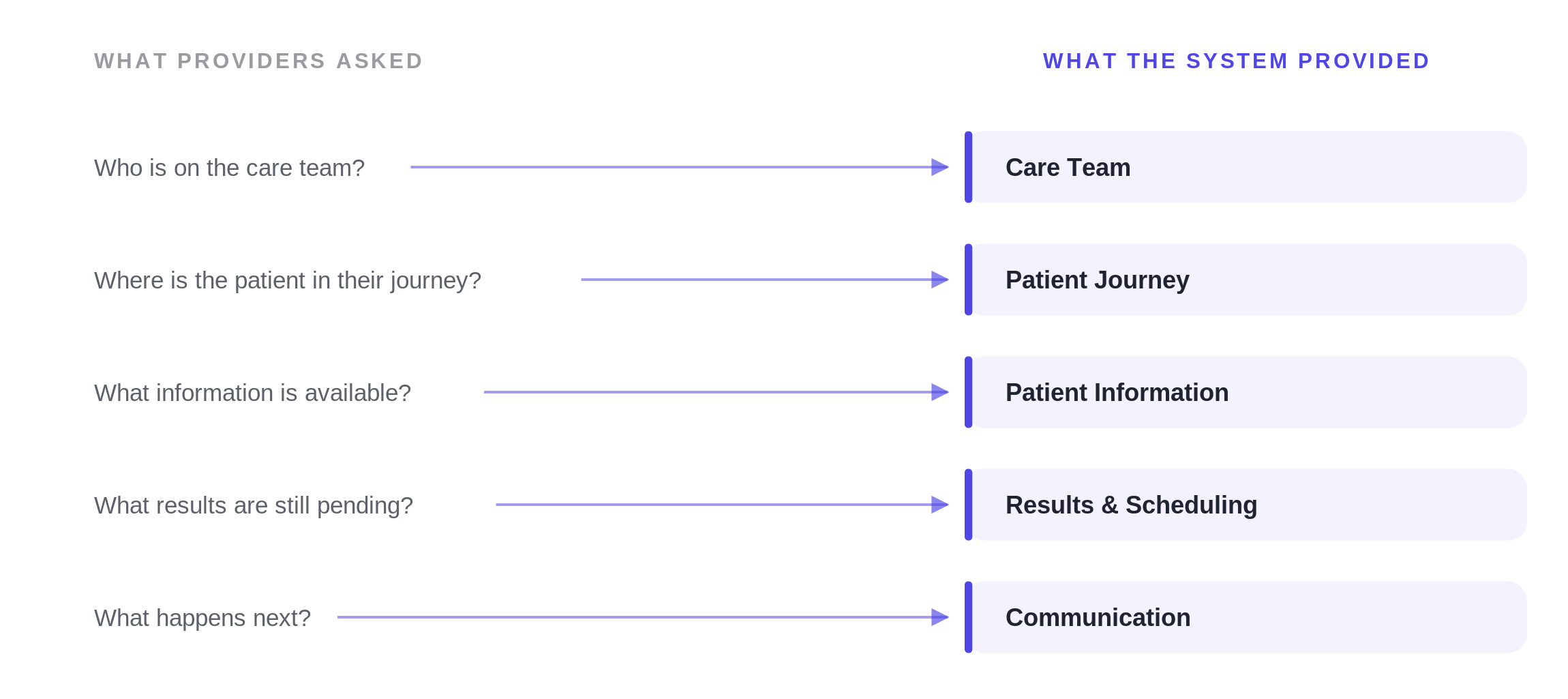
Rather than organizing around clinical departments, we organized around the information providers needed to answer those questions and move the patient forward — spanning the full pathway.
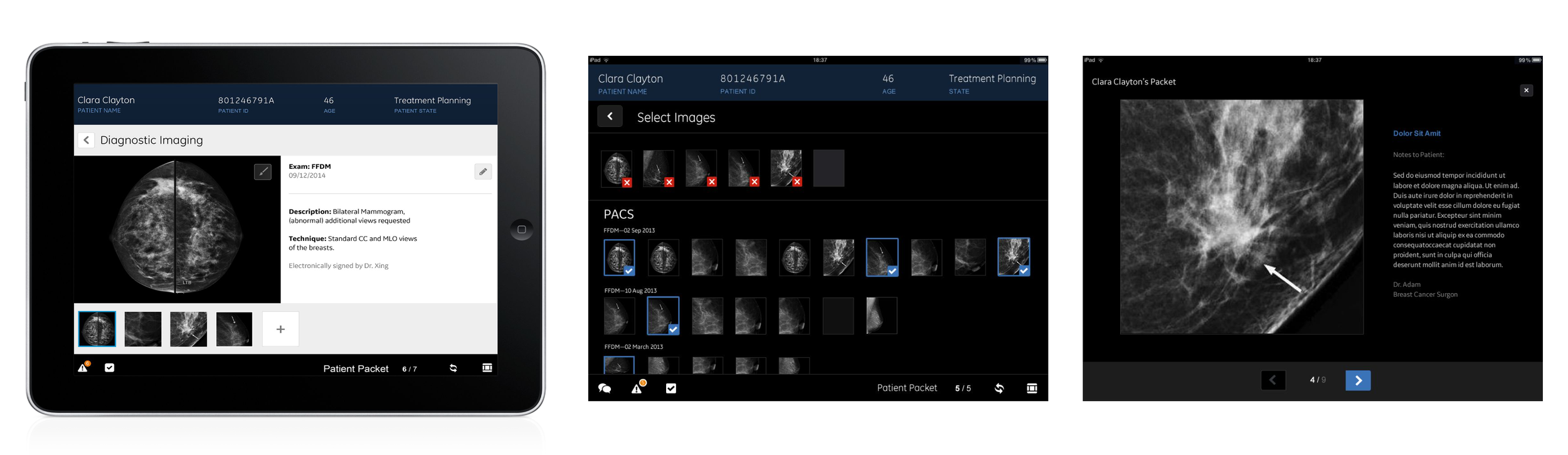
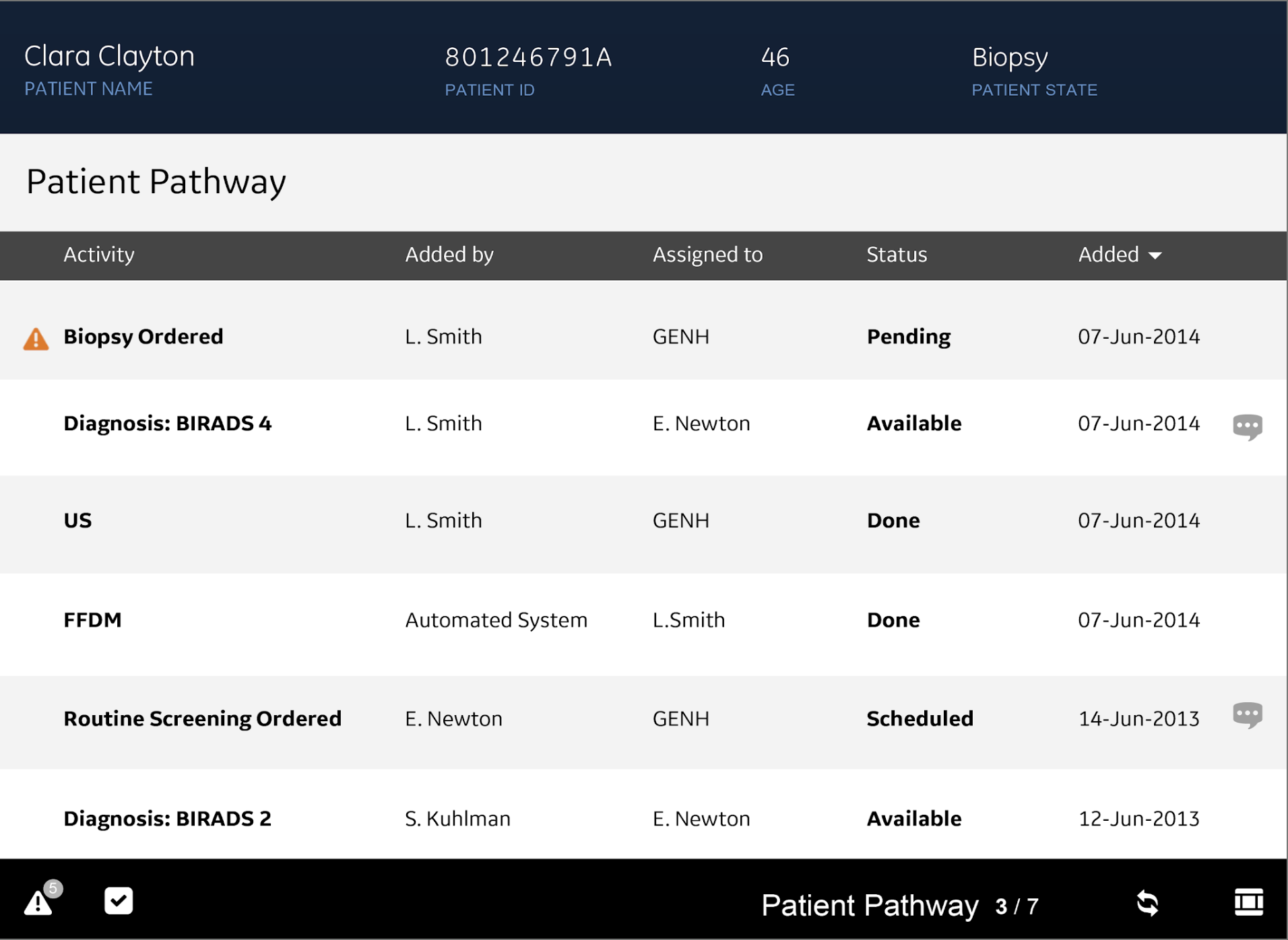
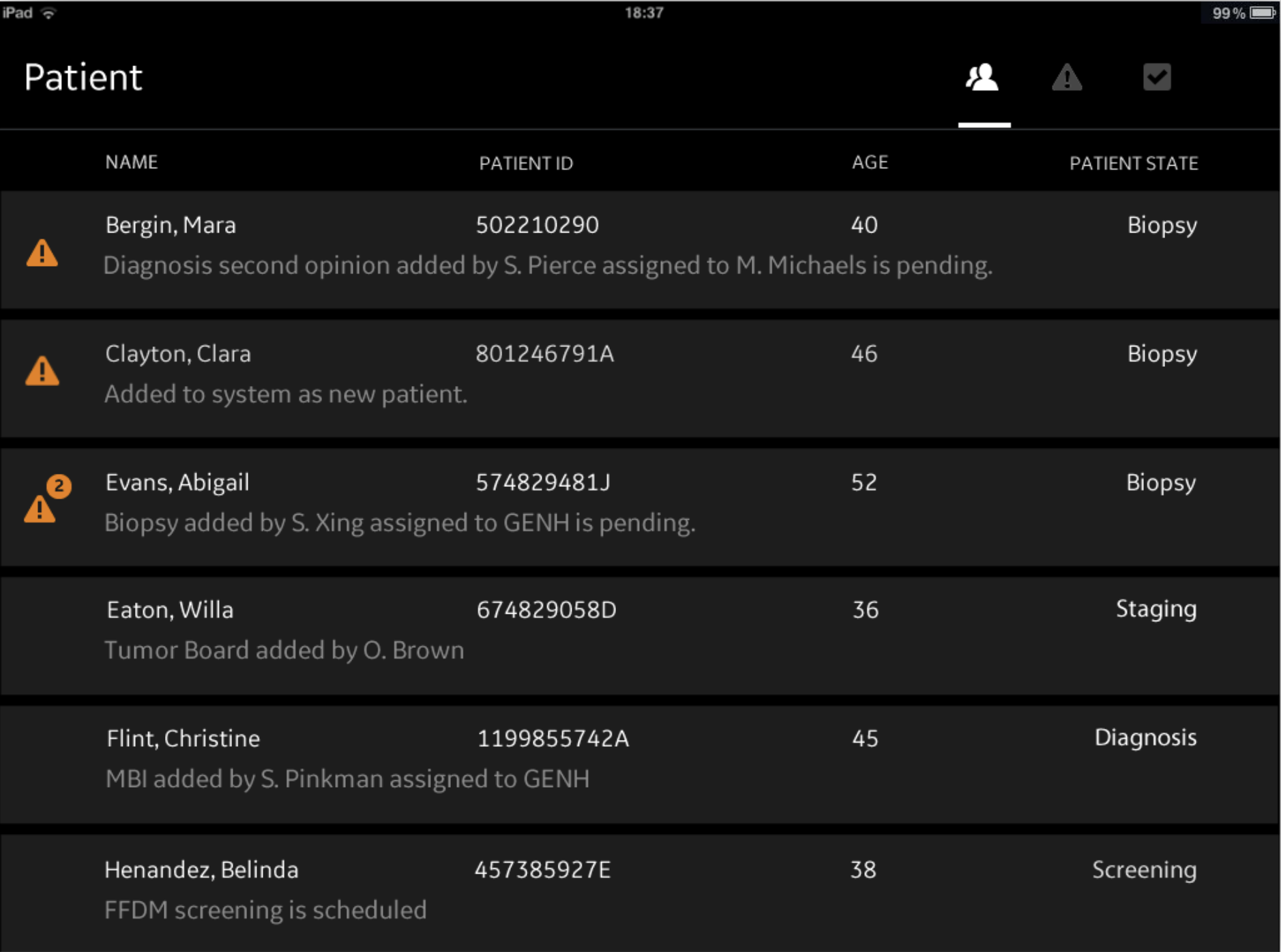
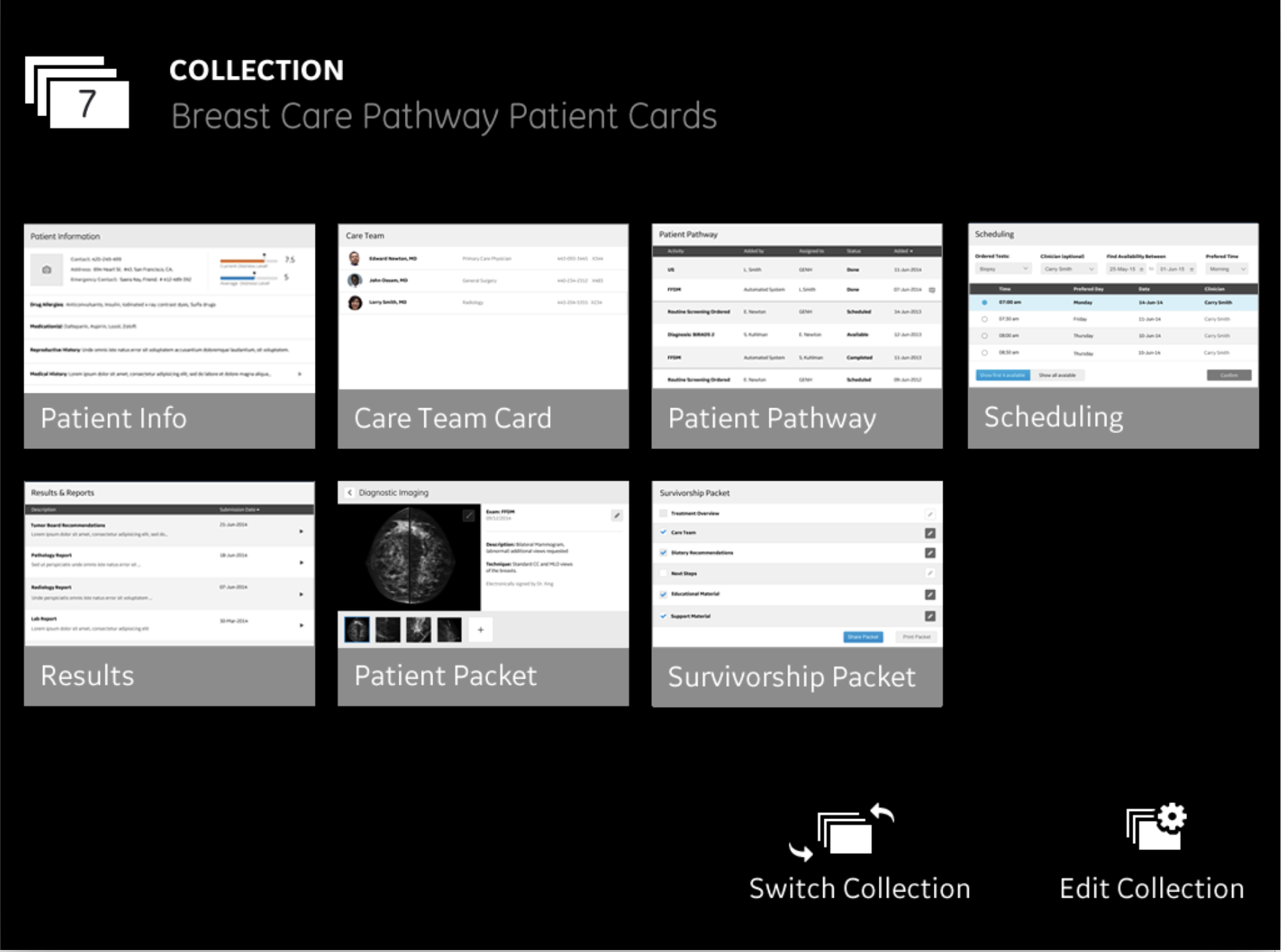
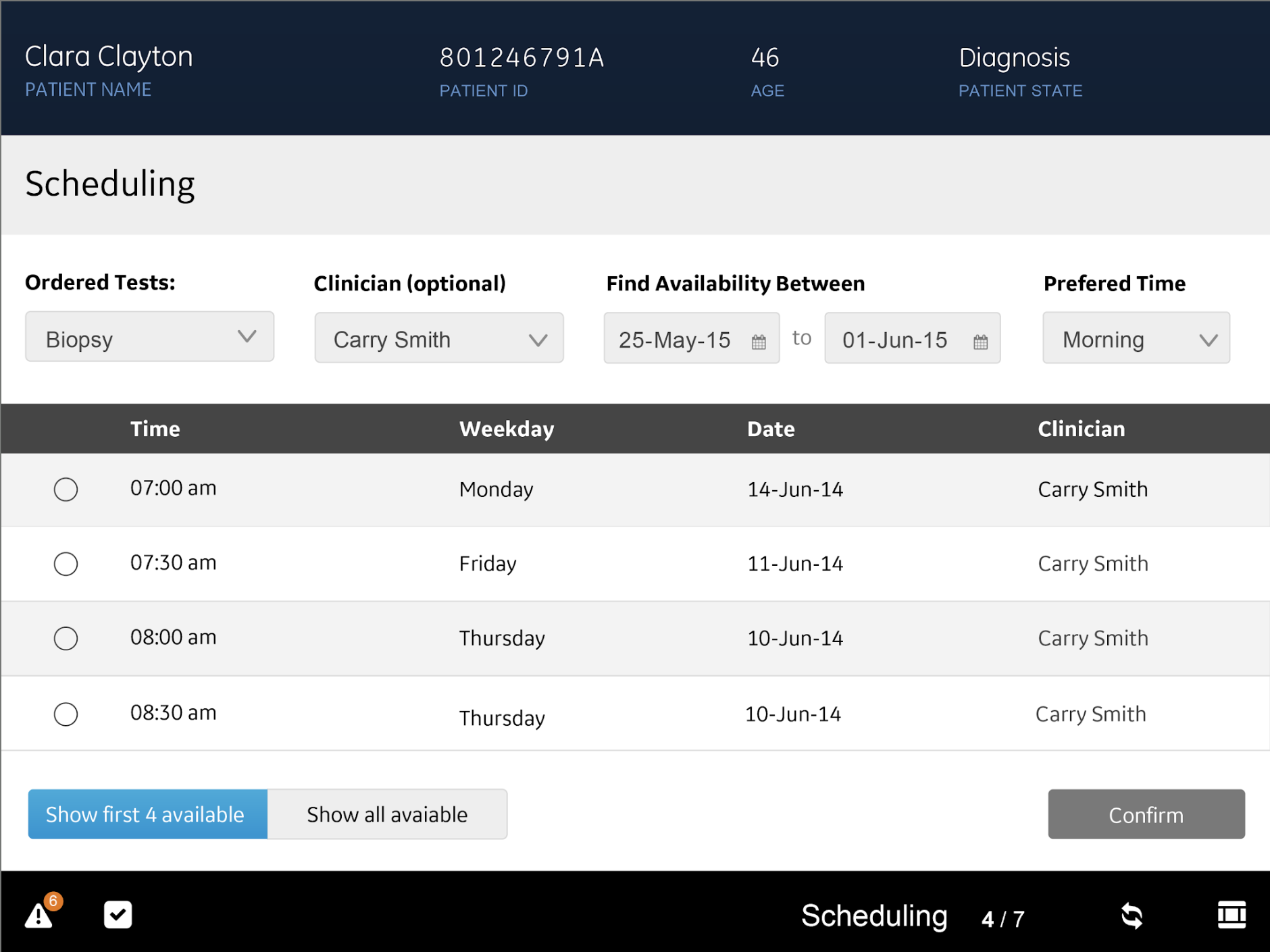
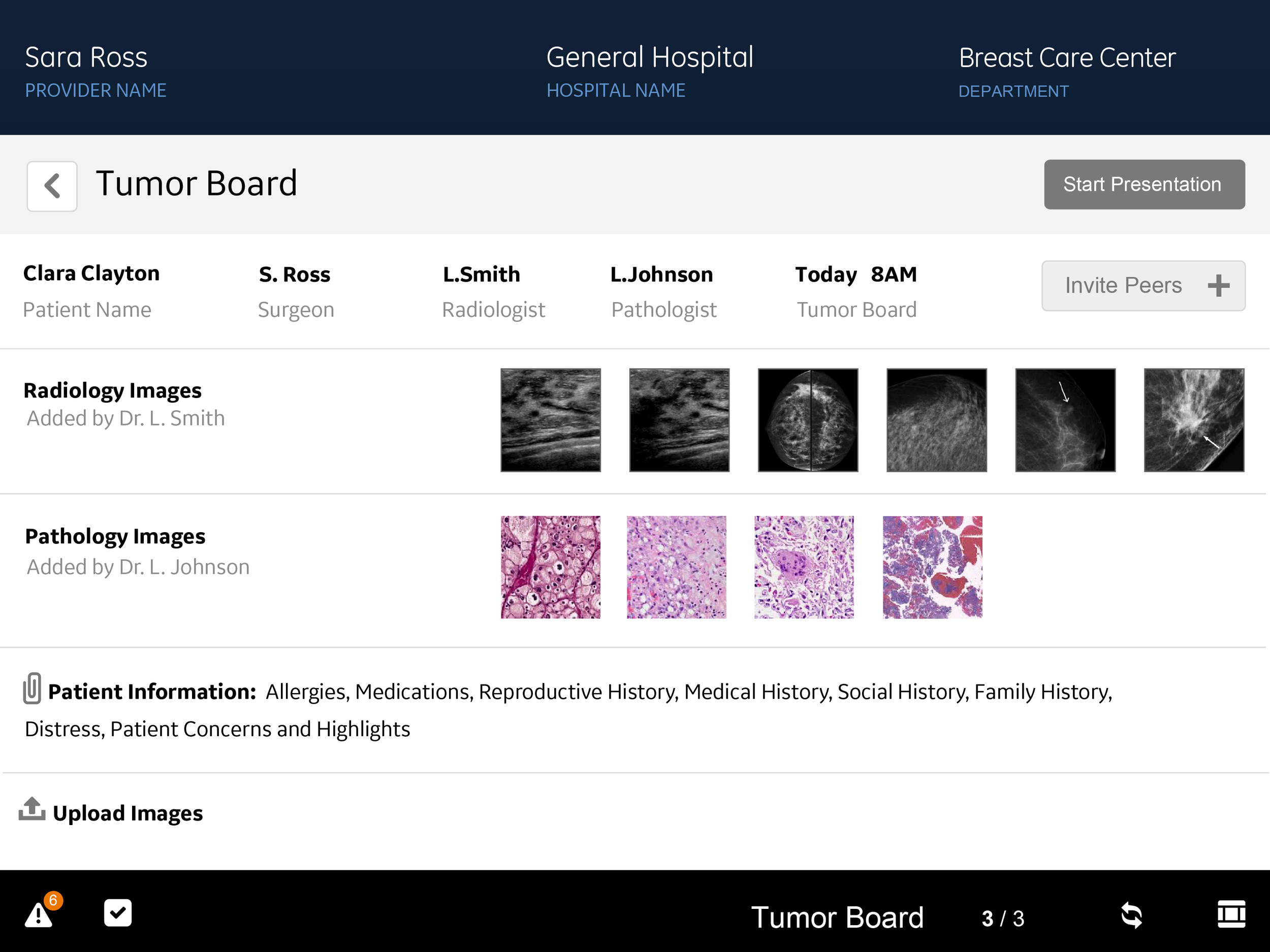
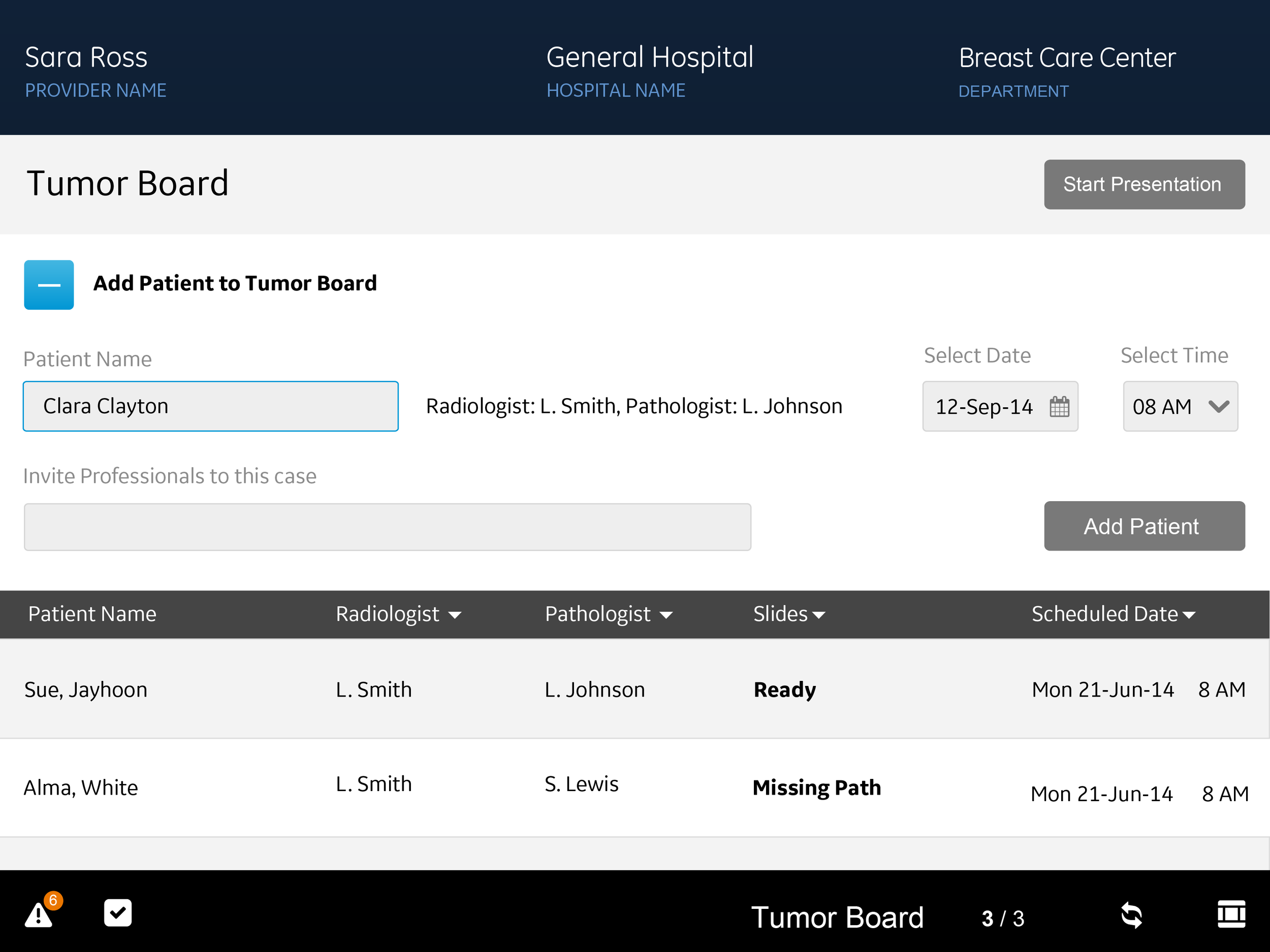
The MVP, a tablet application on GE's Predix platform, brought the five emerging spaces into one connected system. Working with a graphic designer, I led the interaction design, system workflows, information architecture, and interactive prototypes. Research at IGR shaped the final design, including provider cards and concepts for multidisciplinary tumor board collaboration.



Virtual Tumor Board

Impact
The project delivered a high-fidelity MVP and, more importantly, reframed the opportunity: not another clinical application, but a shared coordination system that gave multidisciplinary teams a common view of the patient.
The research, workflow models, and system concepts helped inform GE Healthcare's integrated breast cancer care strategy and contributed to the direction it later developed into its One-Stop Clinic offering. The MVP advanced into proof-of-concept development on Predix. I presented the findings and recommendations to GE Healthcare's product management and business development teams in Cleveland, alongside the GM of User Experience.

Why This Project Mattered
I entered healthcare expecting to improve clinical tools. Instead, the work taught me that meaningful change often comes from understanding the relationships between people, information, and workflows.
That perspective has stayed with me across every domain since, from scientific publishing and regulatory compliance to hyperscale infrastructure. The domain changed. The need to create clarity across complex systems did not.
Today, I design systems that connect people, information, and decisions — especially where complexity has outgrown the tools meant to manage it.

Artifacts shown are recreated for illustration. Confidential product screens and proprietary details have been omitted.